
Market gardening
Vegetables: intensive production, cold chain, urban markets.
West (Foumbot, Dschang), Yaoundé and Douala outskirts.
3 regions out of 10
Schematic map — relative positions, not to scale.
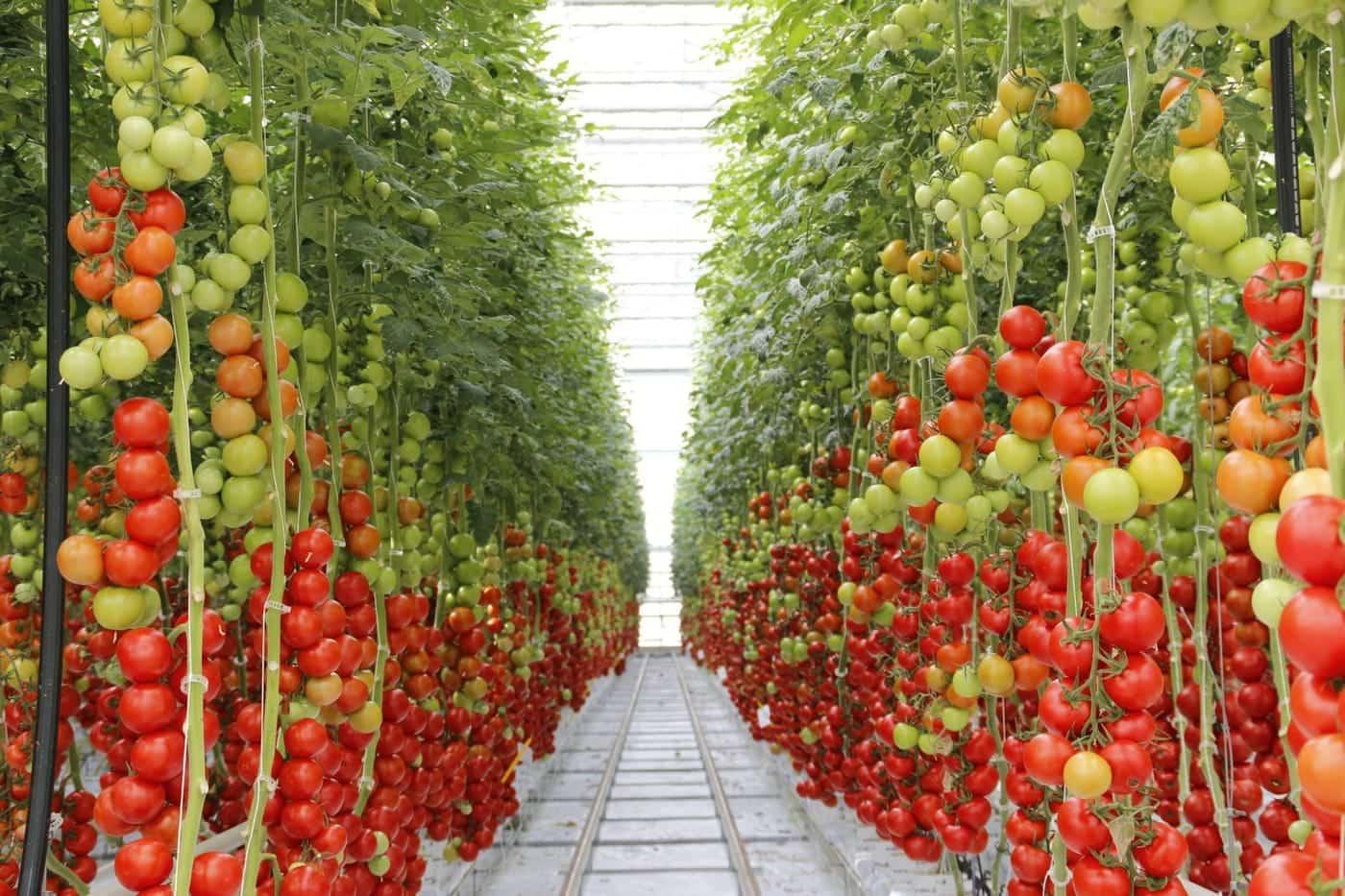
Tomato, onion, chili, leafy vegetables: market gardening supplies cities daily and offers quick income on small plots.
- High perishability and significant losses between field and market.
- Poorly controlled use of plant-protection products.
- High price volatility across seasons.
- Greenhouse and soilless production close to cities.
- Cold chain and packaging to smooth prices.
- Contracting with large retail and food service.
Quick income on small plots, provided the technique is mastered.
- Greenhouse and soilless production to secure yields near cities.
- Quality seeds and cropping calendars spread across the year.
- Water-efficient irrigation (drip) and balanced fertilization.
- Rotations and integrated pest management.
Vegetable food safety is a public-health issue and a commercial advantage.
- Rational and controlled use of plant-protection products.
- Respect of pre-harvest intervals and absence of residues.
- Traceability from plot to stall as a guarantee of trust.
Perishability is enemy number one: cold and packaging smooth prices.
- Cold chain from harvest to point of sale.
- Packaging, grading and suitable containers.
- Loss reduction between field and market.
Securing outlets to smooth the strong seasonal price volatility.
- Contracting with large retail, food service and institutions.
- Staggered production to sell outside oversupply peaks.
- Short circuits and local freshness brands.
Agrovita professionalizes market gardening, from seedling to shelf.
- Engineering of greenhouses, irrigation and good practices.
- Sized cold and packaging solutions.
- Contracting and access to organized urban markets.
From raw material to the circular economy (N1 → N4)
Note NS-20260829/DG/XPN-REF1: four processing levels, from raw packaged product (N1) to recovered by-products and waste (N4), with the destination industrial sector(s).
Washed, graded vegetables under film; fresh tomatoes sorted into crates.
Semi-finished tomato purée/concentrate; bulk IQF frozen vegetables.
Labelled canned tomato; jarred vegetables; ready-to-use sauces.
Trimming waste (compost); washing water (treatment, agricultural reuse).
The product type describes what leaves the farm or the unit, in its state of sale — it is what triggers processing, cold-chain, compliance and certification services.
Market, post-harvest, logistics.
Cold chain, storage, corridor, product compliance.
Unit sizing, energy, food safety management.
Full unit, HACCP, labelling, brand.
44 referenced risks, rated and tied to a control plan. The dominant families for this value chain:
- Building a bankable file — The 7 items funders really expect — and the mistakes that get a file rejected out of hand.
- Quality certification checklist — GLOBALG.A.P., Organic, HACCP: where to start depending on your actor profile and your value chain.
- Structuring your financial plan — The CAPEX / OPEX / cash-flow-per-cycle method, applied to crop and livestock projects.
- Monter un dossier bancable — les 7 composantes essentielles — Ce qu'un comité de crédit attend réellement : les 7 composantes d'un dossier de financement solide.
- Fiche fiscale 2026 — Fiscalité foncière et sécurisation agricole au Cameroun — Ce que la Loi de Finances 2026 change pour vos terres : exonérations de TPF pour l'agriculture, l'élevage et la pêche, frais de bornage réduits de moitié, et l'immatriculation foncière en 4 étapes budgétées en FCFA.
- Guide 2026 des financements agricoles et agro-industriels au Cameroun — Les guichets qui financent réellement l'agriculture et l'élevage — BC-PME (FINAGRO, PIISAH), ACEFA, CamCCUL, MINADER, AFD (C2D), BAD — et la méthode pour leur présenter un dossier bancable.
- Auto-évaluation OHADA — votre GIC ou coopérative est-il éligible aux crédits ? — Grille de diagnostic en 4 domaines (structure juridique, comptabilité, gouvernance, sûretés) pour situer votre groupement face aux exigences de l'Acte Uniforme OHADA — la clé d'accès aux guichets de financement.
- The documents area — pieces to gather and templates.
- AGROEXPORT — this value chain's prices are tracked internationally, by subscription.
Where projects in this value chain begin
A promoter seeking finance who wants the complete file in one engagement, rather than chaining pre-qualification, investment decision and financial structuring separately.
Indicative duration: About 16 weeks →Pre-qualify pathwayA promoter with an intention, a plot or an opportunity, but nothing formalised.
Indicative duration: 2 to 4 weeks →Decide to invest pathwayA promoter whose idea is mature and who is considering a significant financial commitment.
Indicative duration: 6 to 10 weeks →Design the facility pathwayA decided project whose means of production must be settled before costing.
Indicative duration: 8 to 14 weeks →Finance pathwayA designed project seeking financing matched to its cycle.
Indicative duration: 10 to 18 weeks →