
Wholesalers & wholesale markets
Wholesalers and structured wholesale markets that concentrate supply, set price references and feed cities and the retail trade.
Definition in the architecture : Wholesale trade and structured wholesale markets
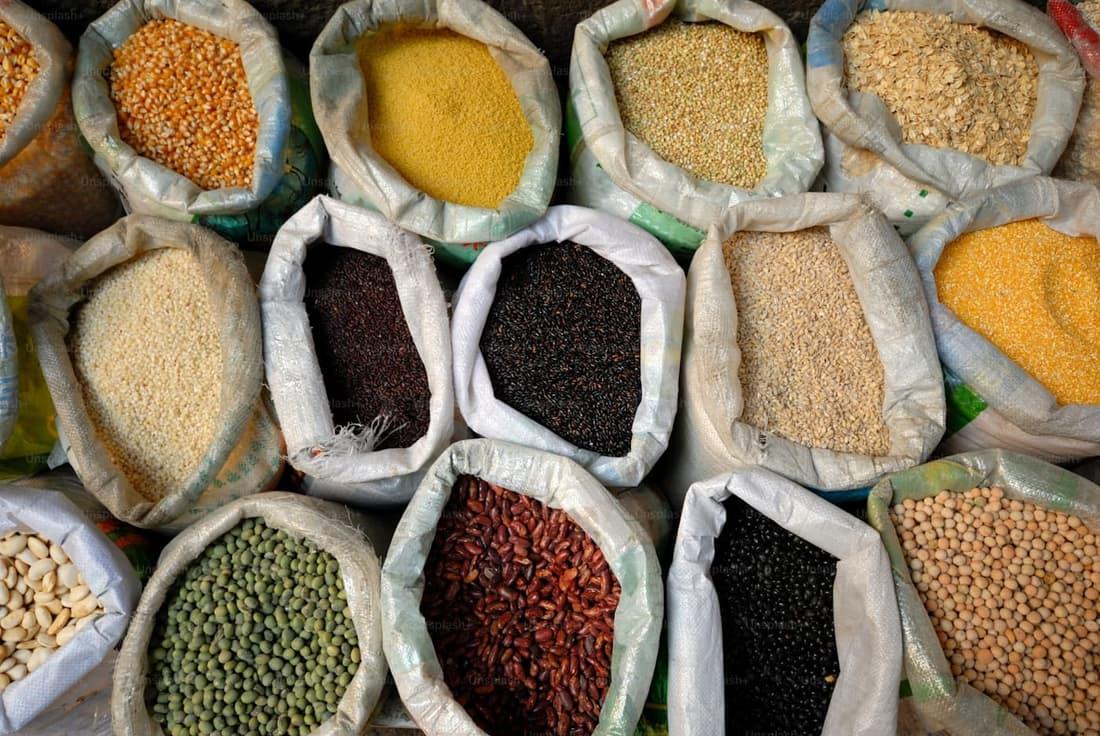
What you do
- Buy in bulk from collectors, cooperatives, processors and importers
- Store, break bulk and redistribute to retailers, caterers and institutions
- Run organised wholesale markets with weighing, trading rules and price information
- Link production basins to consumption centres
- Finance seasonal purchases and extend payment terms to retailers
You receive goods from collectors, cooperatives, processors and importers, and deliver them to retailers, mini-markets, caterers, canteens and institutions. You act as the daily regulator of urban supply: you absorb volumes, provide buffer storage and redistribute quickly. Structured wholesale markets give value chains a price reference and a meeting place. You secure outlets for growers and unlock short-term trade credit close to the market.
Where are you found?In the major markets of Douala and Yaoundé, the main consumption hubs, in Bafoussam for western food crops, in Bamenda and Buea for the North-West and South-West, and in Garoua, Maroua and Ngaoundéré for northern cereals, livestock and onions. Every regional capital has its reference wholesalers.
Why your business matters in Cameroon and Central Africa
The supply of Cameroon’s major cities rests on wholesalers and wholesale markets. They ensure that highland food crops, coastal fish, northern meat and forest-zone fruit reach Douala and Yaoundé every day. Modernising these markets, with storage infrastructure, weighing rules and transparent price information, reduces losses and parasitic margins. It strengthens food sovereignty, creates urban jobs and positions Cameroon as a supplier to the urban markets of Central Africa, where the same wholesalers often operate in networks.
The headings that project promoters, partners and institutions look at first. Fill them in with your real orders of magnitude: this is what makes your profile usable.
- Secure regular supply through contracts with cooperatives and collectors
- Modernise market infrastructure: storage, hygiene, weighing, price information
- Access seasonal financing and guarantees suited to the wholesale trade
- Develop trade with the urban markets of the sub-region and Nigeria
What the directory brings to your organisation
Your listing makes you visible to cooperatives, collectors and processors looking for regular bulk buyers.
You gain access to supply, storage and transport partnerships with logistics and retail players.
You plug into the trading networks that connect Cameroonian basins to the urban markets of CEMAC and Nigeria.
Your listing in three steps
The directory is not a mere listing: each profile is positioned within the architecture (sub-domain, actor, value chain), checked by XP-NOVA, then published. You keep control of your profile after publication.
- The form
You enter your organisation, your position in the architecture — pre-filled from this page —, your value chains, your area of operation and your contact details. Your profile is created as pending and you receive your access.
Start my registration - Verification by XP-NOVA
The XP-NOVA team reviews your profile: consistency of the position in the architecture, reality of the declared activity, completeness of the information. If there is a reservation, the reason is sent to you and you can complete.
- Validation and publication
Once validated, your profile is published in the directory available to members, under your actor code. You update it from your area: contact details, logo, capacities, description.
Browse the directory
Already registered? Go to my area · DP4 DP4.A45
Wholesalers buy in volume from production areas and supply the entire distribution network.
- Cash tied up in stocks.
- Losses on perishable products.
- Reliability of seasonal supplies.
- Financing of storage and buying campaigns.
- Warehouses and modern stock management.
- Upstream contracts with cooperatives and farms.
To wholesalers: reliable supply, at last
Your business rests on a simple equation: buying regular volumes, of consistent quality, at the right price. Yet poorly structured value chains make that equation uncertain — immobilized stock, losses on perishables, unpredictable seasonal supply.
By structuring the upstream (cooperatives, farms, contracts), XP-NOVA makes local supply more legible and more reliable for trade. Organized value chains mean wholesalers who buy with confidence.
- Upstream contracts with organized producers.
- Financing of storage and purchasing campaigns.
- Traceability and consistency of volumes.
The XP-NOVA team
The XP-NOVA offers that match you, step by step
Each offer carries its code and unfolds into the elementary services of the catalogue. The project only moves forward once the milestone is reached — start at the step you are at.
44 referenced risks, rated and tied to a control plan. These are the families of the register that touch your activity — rating your project is the object of the resilience assessment, the condition of the step 4 milestone of the cycle.
- The documents area — the pieces to gather, step by step, and the templates.
Position within the architecture
Downstream — preserving and moving value
Other actors of the sub-domain — Logistics & Distribution