
From the idea to the first invoice paid.
An agricultural project almost never dies for want of a good idea. It dies because a step was skipped: the market was not verified, the facility was sized from a catalogue, funding arrived too late, or nobody was trained on start-up day. Our method breaks your project into 13 steps grouped into 4 phases — and each one closes on a document you can show.
Design & strategic validation
4 steps · 1–4Technical & financial engineering
4 steps · 5–8Build-out & operational deployment
3 steps · 9–11Commercialisation & completed sales
2 steps · 12–13How to read this page
The method divides a project into phases and steps, from the idea to the first invoice paid. Each step has an objective, closes on a milestone, and only opens the next one when its resilience condition is verified.
- The cycle reads phase by phase: for each step, the question it settles, its objective, its milestone and the catalogue services that serve it.
- The PTE-R doctrine — Produce, Transform, Export, Resist — sets the course; the trade readings and cross-cutting components apply it to your project.
- The governance rules can be checked by a third party; the end of the page restates the sequence, from the free submission to the assignment quote.
A step is not finished because time has passed.
It is finished because a milestone is evidenced: an approved document, a report, a signed agreement, an invoice. And because its resilience condition is verified — the answer to “what if it breaks?”, asked at every one of the 13 steps. This page shows them all.
« The project only moves forward if the milestone is reached — and a milestone is only reached if its resilience condition is verified. »
4 phases, 13 steps, 4 decisions.
Each phase ends with a decision you take, informed, on the basis of a written opinion. Stopping in phase 1 costs you a study; stopping in phase 3 costs you the project.

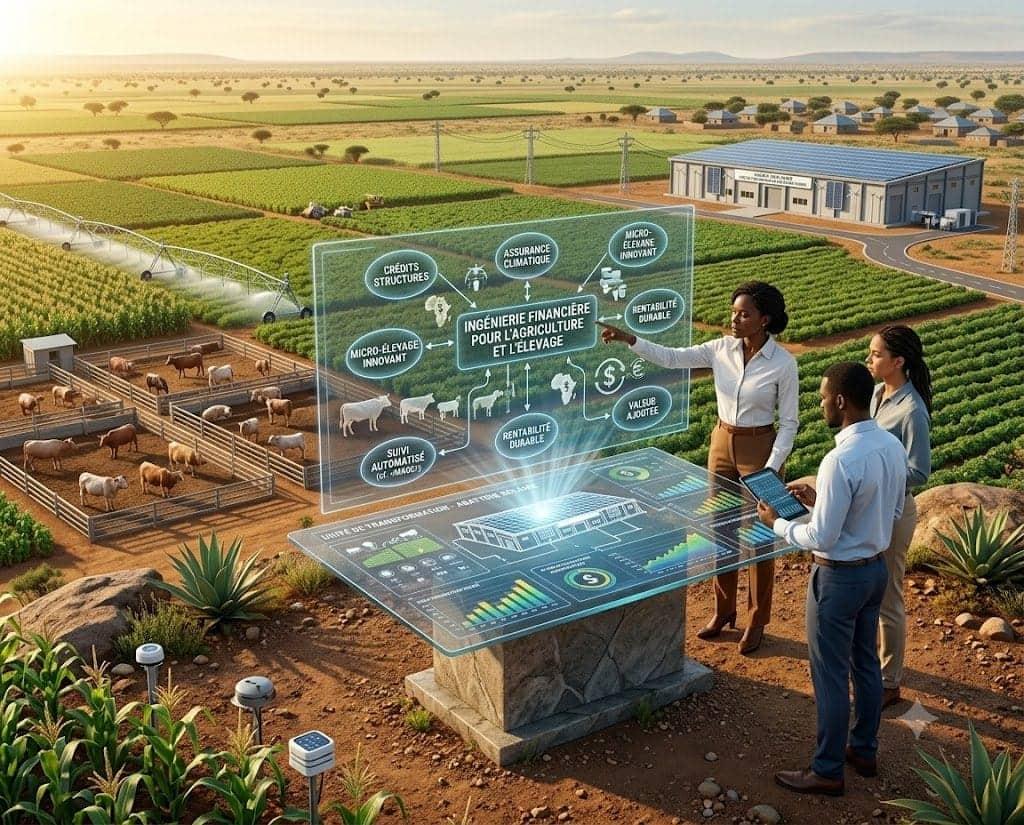
Design & strategic validation
« Is this project worth your money? »
Prove that the problem is real, that the market exists and that the offer answers it — before committing any heavy investment.
The idea
« Is the idea mature, and is the site exposed? »
Formulate the initial vision of the farming, livestock or agro-industrial project, and measure its maturity.
MilestoneApproved letter of intent, including risk analysis and adaptability criteria.
Resilience conditionThe AGROBOUSSOLE dual score is produced — idea maturity on one side, site exposure on the other — and apparent dependencies are listed: water access, power reliability, land title.
Problem & value
« Is the problem real, and the value verifiable? »
Identify the actual problem faced by growers, livestock farmers, processors or markets, and the value the project brings them.
MilestoneApproved value proposition, including adaptive solutions.
Resilience conditionThe problem is established in the field, through dated interviews with the actors concerned — never inferred from desk research alone.
Market study
« Does the market truly exist, and at what price? »
Validate the existence of an accessible market — local, national or export — and measure its volumes and prices.
MilestoneMarket study report including a SWOT matrix that covers risks and opportunities.
Resilience conditionPrices are collected in the field and dated; written letters of intent secure the announced volumes. An undated market price is not data.
Designing the offer
« Is the offer defined, robust and defensible? »
Define precisely the farm, processed or livestock product, and the specification that frames it.
MilestoneApproved functional specification, including durability and adaptability criteria.
Resilience conditionProject risks are rated on three dimensions — probability, impact and stop factor — and blocking dependencies are named. A low-cost risk able to halt operations remains blocking.
Viability and survivability opinion — GO, NO-GO or conditional GO locking the blocking dependencies.
Technical & financial engineering
« Is the project bankable, and by whom? »
Turn the validated offer into a production tool sized on reality, and into a file funders can check line by line.
Production tool
« Is the tool sized on reality, not on the catalogue? »
Determine the means required to produce the offer: site, buildings, equipment, energy, logistics.
MilestoneApproved technical specification, with modularity and flexibility built in.
Resilience conditionSizing is calculated on the raw material actually available, not on the theoretical capacity of the machines. CAPEX includes a continuity budget costed in FCFA: backup power, critical input stock, spare parts.
Financial plan
« Does the model hold, including in a degraded scenario? »
Model the economic viability of the project, entirely in FCFA.
MilestoneApproved financial plan, including safety margins and stress scenarios.
Resilience conditionThe 24-month monthly cash-flow plan includes a liquidity reserve of at least three months of OPEX — sized in months of running costs, never as a percentage of CAPEX.
Business plan
« Does the file speak its funder’s language? »
Structure the project in the format expected by the targeted funder.
MilestoneApproved business plan, including the risk mitigation plan.
Resilience conditionThe stressed financial model is delivered open — formulas accessible and checkable line by line — and the data room is structured in the target funder’s format. A locked model cannot be appraised.
Financial close
« Are the resources accessible, and compatible with the cycle? »
Secure the financial resources and organise their release.
MilestoneSigned financing agreements, with risk-management clauses attached.
Resilience conditionEach need is matched to a resource of compatible maturity: the financing-by-use rule forbids funding infrastructure with short-term debt.
Bankable file and signed OHADA escrow agreement.
Build-out & operational deployment
« Does the tool actually run, and does it hold? »
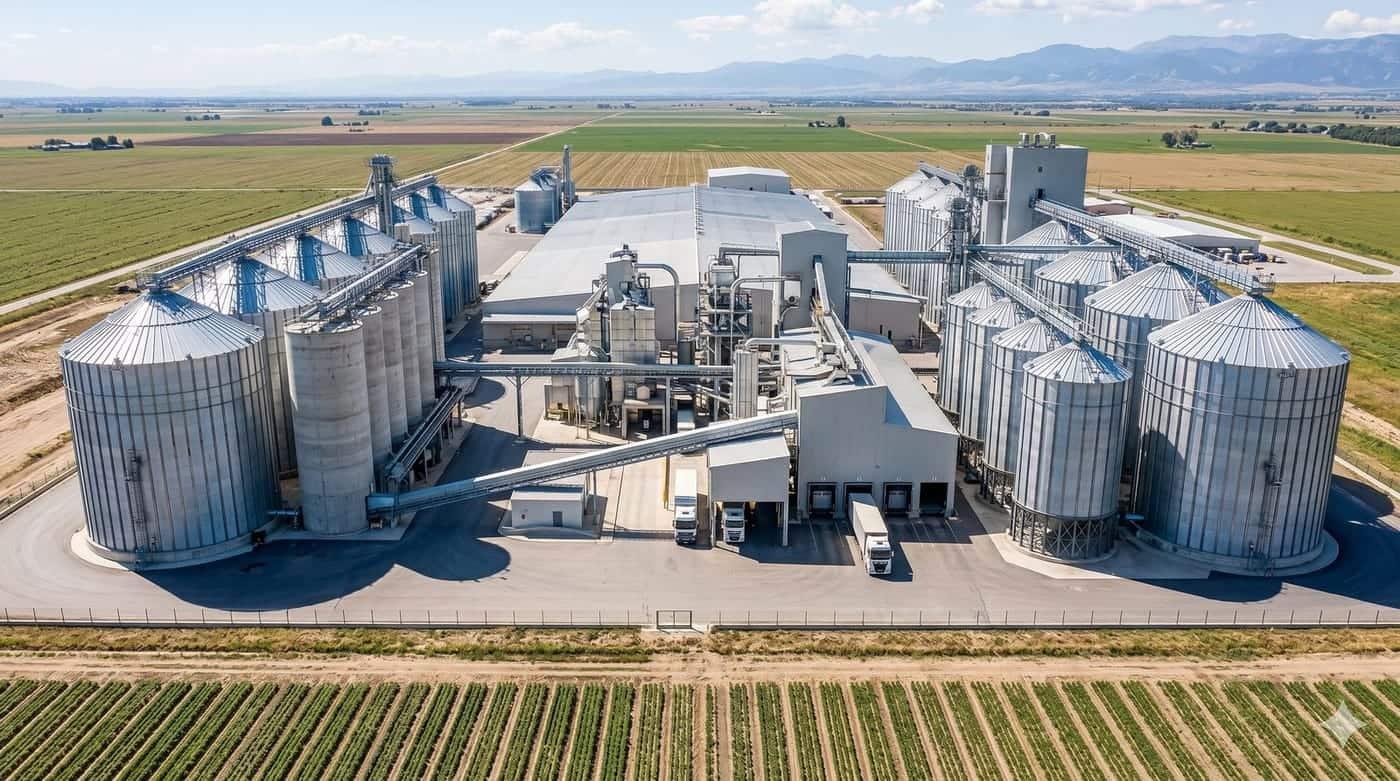
Build, start up and hold operations — verifying that the arrangement works, not merely that it exists.
Installing the tool
« Is delivery compliant, and does the arrangement work? »
Install, take delivery of and commission the production tool.
MilestoneMilestone technical visa and continuity-test report.
Resilience conditionThe continuity test is run under load — the grid is cut deliberately to verify the switch to backup power or refrigeration. Critical stocks are physically constituted and skills certified.
Operations
« Is performance on target, and are breakdowns anticipated? »
Run production and day-to-day operations without unplanned interruption.
MilestoneResilience dashboard and periodic risk reviews.
Resilience conditionLeading breakdown indicators are tracked against defined alert thresholds: days of stock cover, power downtime, MTTR, months of actual cash. Failures are corrected before they cut off activity.
Go-to-market
« Is the launch organised, and the product compliant? »
Organise the commercial launch of the offer.
MilestoneApproved go-to-market plan, including adaptive strategies.
Resilience conditionAt least two distribution channels are qualified, one of them independent of the main channel; the required approvals and certifications are obtained before first placing on the market.
Milestone technical visa issued and resilience dashboard in service.
Commercialisation & completed sales
« Has the customer paid? »
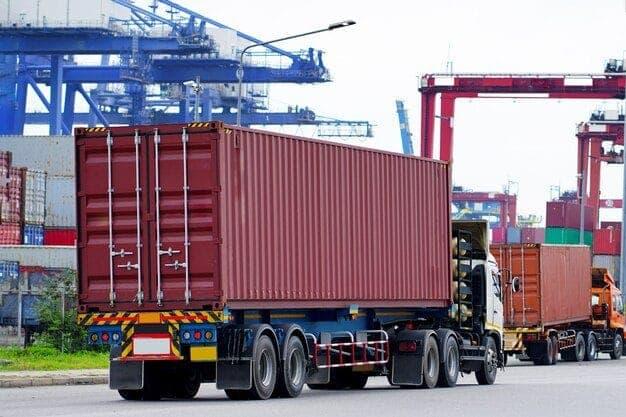
Deliver the product to the customer, by the book, and turn the first sale into a running business.
Selling
« Is commercialisation compliant, and delivery secured? »
Activate commercialisation and contract with buyers.
MilestoneApproved catalogue and flexible commercial terms.
Resilience conditionThe logistics corridor is qualified: real door-to-door times measured, border document checklist established, transport contract with a fallback plan B.
Completed sales
« Are sales materialising, and does the customer come back? »
Complete sales, deliver, and secure customer satisfaction over time.
MilestoneSatisfaction reports and post-launch adjustments carried out.
Resilience conditionDocumentary compliance is verified before every shipment, and the complaint rate is tracked against a defined alert threshold. The first sale only counts if the second follows.
Complete compliance file and signed purchase contract.
The cycle counts 112 coded services across 4 industry readings. See the catalogue, step by step →
66 deliverables, phase by phase.
A method is judged not on its intentions but on what it puts on the table. Here, phase by phase, are the documents produced — the ones you can show a funder, a partner or an administration.
P1Design & strategic validation19 deliverables
1. The idea
- XP-NOVA letter of intent
- One-page summary of the idea
- Preliminary objectives: value chain, territory, livestock
- Exposure sheet and list of apparent dependencies
2. Problem & value
- Value Proposition Canvas
- Value-chain problem statement: production, processing, livestock
- Personas: growers, livestock farmers, processors, distributors, consumers
- Preliminary review of existing solutions
3. Market study
- XP-NOVA market study report
- Local, national and export demand analysis
- Competition analysis: value chains, processing units, imports
- Trend analysis: consumption, standards, biosecurity, certifications
- Market segmentation B2B, B2C, export
- Value-chain SWOT matrix and strategic recommendations
4. Designing the offer
- Product sheet: farm, agro-industrial or livestock
- Functional specification: standards, quality, food safety, biosecurity
- XP-NOVA positioning and commercial promise
- Concept mock-up, design, packaging
- Technical specifications: varieties, formulations, processes, breeds, inputs
P2Technical & financial engineering22 deliverables
5. Production tool
- Production technical specification: farming, industrial, livestock
- Bill of Materials
- Site layout: processing unit or livestock building
- Production processes (XP-NOVA SOP)
- Capacity plan: tonnage/day, cycles, yield, herd size
- Investment budget (CAPEX) including the continuity budget
6. Financial plan
- Investment plan (CAPEX) and operating plan (OPEX)
- Production and sales forecasts
- 24-month monthly cash-flow plan
- Forecast income statement and balance sheet
- Break-even point, ROI and XP-NOVA indicators
- Three-scenario sensitivity: pessimistic, realistic, optimistic
7. Business plan
- Complete XP-NOVA business plan
- Executive summary
- Technical annexes: value chain, production tool, livestock, financial plan
- Value-chain risk analysis and mitigation plan
- Structured data room
8. Financial close
- XP-NOVA financing file
- Final financing plan
- Financing agreements and conventions
- Disbursement schedule
- OHADA escrow agreement
P3Build-out & operational deployment16 deliverables
9. Installing the tool
- Installation report
- Equipment acceptance report
- Functional tests and continuity test under load
- Compliance certificates: food standards, livestock biosecurity
- XP-NOVA operating manual
- Staff training certificates
10. Operations
- XP-NOVA operational plan
- Quality procedures (QA/QC)
- Production and resilience dashboard
- Logistics plan and stock management
- Operating reports and risk reviews
11. Go-to-market
- XP-NOVA go-to-market plan
- Value-chain commercial strategy and communication strategy
- Distribution plan: local, national, export
- Launch schedule
- Marketing materials
P4Commercialisation & completed sales9 deliverables
12. Selling
- XP-NOVA commercial catalogue and price list
- Sales contracts and general terms
- Sales scripts
- Commercial dashboard
- Prospecting reports
13. Completed sales
- Purchase orders, delivery notes, invoices
- Customer satisfaction reports
- Completed-sales dashboard
- XP-NOVA post-launch analysis
Produce · Transform · Export · Resist
The cycle describes how we work. The PTE-R model states what for: four movements that order all our engineering — from the plot to the contract, and over time.
Demand first, never supply: every project starts with proof that a market buys, at what price and in what volume. You do not plant hoping to sell — you produce what is already in demand.
Margin is built after the harvest: processing, standards and certification turn raw produce into a valued product — and a farm into a business.
Paying markets pull the whole value chain up: reaching export by the book (EUDR, certifications) raises standards, prices and local impact.
A project only creates value if it keeps producing, sourcing and delivering through disruption. Resilience is not a precaution: it is a condition of performance.
This cycle is the agricultural reading of XP-NOVA’s engineering method. The firm applies the same requirements to its other fields — public facilities, infrastructure, monitoring and evaluation — through a six-phase method presented on xp-nova.com.
One method, 4 industry readings.
The steps are identical for every project. What changes is what goes into them: specifications for a livestock building are not a field layout, and a HACCP plan is not an irrigation plan.
Cocoa, coffee, maize, cassava, plantain, market gardening, fruit, medicinal plants.
- P1 Understand soils, varieties, cycles and climate constraints; analyse markets, prices and standards.
- P2 Lay out plots, greenhouses and irrigation; size inputs and model yields, costs and margins.
- P3 Farm infrastructure goes up; SOPs guide planting, upkeep and harvest.
- P4 Local markets, cooperatives, export: selling becomes a controlled routine, tuned by the watch.
Land becomes value.
Poultry, pigs, cattle, small ruminants, fish farming.
- P1 Analyse breeds, cycles and nutritional needs; study meat, milk, egg and fish markets.
- P2 Design housing, watering, ventilation and effluent management; size the herd and the zootechnical SOPs.
- P3 Animals arrive; SOPs govern feeding, care and biosecurity, under delivery control.
- P4 Butchers, markets, industrial buyers: the value chain becomes durable and profitable.
Living stock becomes performance.
Juices, oils, flours, feed, charcuterie, dairy.
- P1 Analyse finished products, markets, sanitary standards and consumption trends.
- P2 Design the plant: machines, process, flows, hygiene, HACCP SOPs, capacity and cost scenarios.
- P3 Machines arrive, tests follow on, quality control and ESG compliance come online.
- P4 Retail chains, wholesalers, export: the watch drives adjustments to recipes, prices and volumes.
Raw material becomes product.
Farm machinery, equipment, inputs, cold chain, logistics.
- P1 Analyse the industrial needs of the other chains, their markets, standards and trends.
- P2 Design equipment, systems and processes; size capacity, flows and industrial SOPs.
- P3 Installation, conformity testing, team training, delivery control.
- P4 B2B, distributors, export: the value chain becomes strategic for the whole territory.
Technology becomes leverage.
4 cross-cutting strands
They are not end-of-journey options: they attach to specific steps, with their own coded services.
ESG issues are appraised from step 2, then built into the offer, the specification, the financial plan and post-launch reporting.
Independent verification at every milestone: framing, methodology, technical studies, financial models, installation, sales.
Skills transfer to the promoter’s teams — design, technical, financial management, operations, commercial.
Market, products, equipment, costs, regulation, operations: the watch feeds decisions instead of trailing them.
Milestones, file-opening fees, bankability, land tenure: AGROVITA’s official FAQ answers the questions the method raises.
Four rules a third party can check
The rules that govern every assignment, each with the way to check it.
The author of a study is never its reviewer. The reviewer is appointed by name for the assignment.
How to check it: The review report carries their name and capacity.
No financial model is handed over locked: assumptions, formulas and links remain readable.
How to check it: Open the workbook and change an assumption.
Every external figure carries its source and date; what could not be verified is written as such.
How to check it: Every deliverable ends with its sources.
The approval that triggers a disbursement is not issued by whoever built the works.
How to check it: The clause is written into the escrow agreement.
Let’s place your project on the 13 steps.
Submitting your request is free and without obligation. You get a first reply within 48 working hours. The assignment quote is issued only after the official opening of the file (FOD), in FCFA, followed by the AMO or MOE agreement with its milestones and escrow.
Version 2026.6 — updated 27 August 2026