
Transporters
Road and specialised hauliers who move agro-pastoral products from production basins to markets, factories and ports.
Definition in the architecture : Road and specialised transport of agro-pastoral products
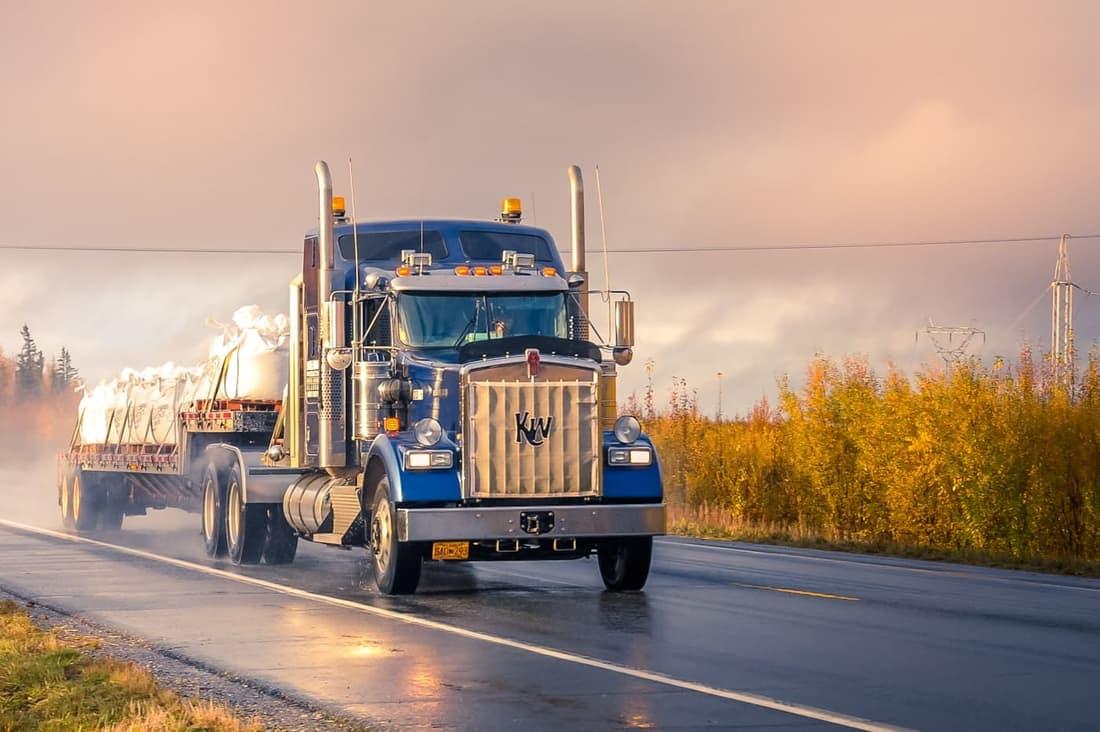
What you do
- Carry farm produce, live animals and inputs by road
- Operate suitable vehicles: tippers, flatbeds, livestock trucks, insulated lorries
- Plan collection rounds and deliveries to factories, markets and ports
- Handle transport documents and formalities at checkpoints
- Ensure loading, securing and preservation of goods in transit
You receive goods from collectors, cooperatives, factories and wholesalers, and deliver them to processors, wholesale markets, retailers and port terminals. You are the physical link between every stage of the Produce – Process – Export chain. Your reliability determines product freshness, contractual lead times and final cost. You secure continuity of flows on an uneven road network and unlock access from remote areas to urban and regional markets.
Where are you found?Across the whole country, with concentrations in Douala and Yaoundé, the main freight hubs, along the Bafoussam – Bamenda axis for highland food crops, and in Ngaoundéré, Garoua and Maroua for northern flows and corridors to neighbouring countries. The port areas of Douala and Kribi concentrate export traffic.
Why your business matters in Cameroon and Central Africa
Transport is one of the main sources of losses and costs in Cameroon’s value chains. Distances between production basins and consumption centres, road conditions in the rainy season and checkpoints along the main routes all weigh on competitiveness. Organised, well-equipped and professional hauliers reduce post-harvest losses, smooth the supply of cities and give exporters the punctuality their clients require. They also carry sub-regional trade towards Chad, the Central African Republic, Gabon and Nigeria, where Cameroon acts as a corridor for Central Africa.
The headings that project promoters, partners and institutions look at first. Fill them in with your real orders of magnitude: this is what makes your profile usable.
- Contract with regular shippers to smooth activity and reduce empty return trips
- Invest in vehicles suited to sensitive goods: insulated lorries, livestock trucks, tankers
- Comply with the documentary and sanitary requirements of CEMAC corridors and ports
- Pool flows with collectors, wholesalers and exporters to optimise rounds
What the directory brings to your organisation
Your listing makes you visible to cooperatives, factories, wholesalers and exporters seeking reliable hauliers on their routes.
You gain access to recurring transport contracts and groupage partnerships with logistics and cold-chain operators.
You position yourself on CEMAC corridors and routes to Nigeria by connecting with the forwarders and traders in the directory.
Your listing in three steps
The directory is not a mere listing: each profile is positioned within the architecture (sub-domain, actor, value chain), checked by XP-NOVA, then published. You keep control of your profile after publication.
- The form
You enter your organisation, your position in the architecture — pre-filled from this page —, your value chains, your area of operation and your contact details. Your profile is created as pending and you receive your access.
Start my registration - Verification by XP-NOVA
The XP-NOVA team reviews your profile: consistency of the position in the architecture, reality of the declared activity, completeness of the information. If there is a reservation, the reason is sent to you and you can complete.
- Validation and publication
Once validated, your profile is published in the directory available to members, under your actor code. You update it from your area: contact details, logo, capacities, description.
Browse the directory
Already registered? Go to my area · DP4 DP4.A42
From pick-up to refrigerated truck, they move products, animals and inputs across the whole territory.
- Road conditions and operating costs.
- Temperature-controlled transport rare.
- Empty return trips and profitability.
- Transport contracts backed by organized value chains.
- Financing of adapted vehicles (cold, livestock trucks).
- Pooling and route optimization.
The XP-NOVA offers that match you, step by step
Each offer carries its code and unfolds into the elementary services of the catalogue. The project only moves forward once the milestone is reached — start at the step you are at.
44 referenced risks, rated and tied to a control plan. These are the families of the register that touch your activity — rating your project is the object of the resilience assessment, the condition of the step 4 milestone of the cycle.
- The documents area — the pieces to gather, step by step, and the templates.
Position within the architecture
Downstream — preserving and moving value
Other actors of the sub-domain — Logistics & Distribution