
Purchasing centres
Organisations that pool the demand of several buyers to negotiate volumes, prices and grouped supplies of products and inputs.
Definition in the architecture : Pooling the demand of several buyers to negotiate volumes, prices and grouped supplies
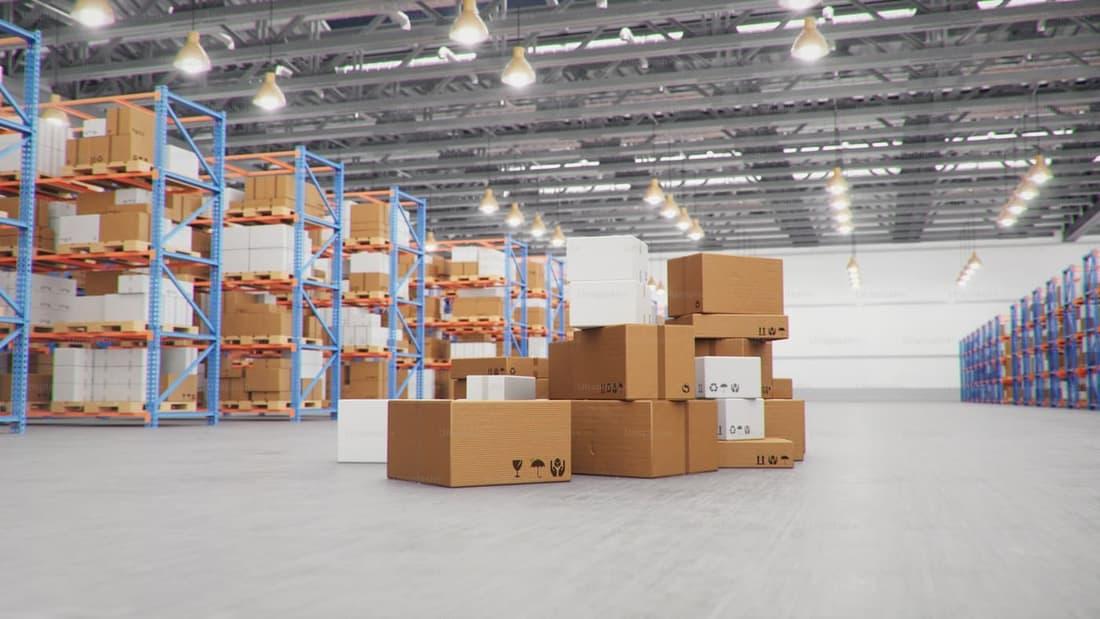
What you do
- Consolidate the purchasing needs of retailers, caterers, institutions or processors
- Negotiate volumes, prices and delivery terms with suppliers
- Organise grouped supplies of food products and agricultural inputs
- Qualify and monitor suppliers: quality, regularity, compliance
- Manage distribution logistics among the centre’s members
You receive the consolidated orders of your members, whether retailers, canteens, hotels, processors or producer groups, and negotiate with processors, wholesalers, importers and input manufacturers. You then deliver to each member according to its needs. You give small buyers the bargaining power of large ones and give suppliers a readable, plannable demand. You secure prices, regularity of supply and quality through supplier selection, and unlock access to inputs for organised producers.
Where are you found?In Douala and Yaoundé for the purchasing centres of retail, catering and institutions. Input purchasing centres are organised within cooperatives in the farming basins: the western highlands, the northern cotton zone, the cocoa basins of the Centre and South, and the livestock areas of Adamaoua.
Why your business matters in Cameroon and Central Africa
In a fragmented market where most buyers are small, purchasing centres cut procurement costs and improve delivery regularity. They give local processors the grouped orders that justify industrial investment. For growers, an input purchasing centre lowers the cost of seed, fertiliser and animal feed and raises their quality. These structures contribute to the formalisation of the food trade, price stability and import substitution. At sub-regional level, they can pool supplies among buyers from several CEMAC countries.
The headings that project promoters, partners and institutions look at first. Fill them in with your real orders of magnitude: this is what makes your profile usable.
- Broaden the membership base to increase bargaining power with suppliers
- List reliable local suppliers able to replace imported products over time
- Secure financing and guarantees for grouped purchases from financiers
- Pool logistics with warehouses and hauliers to reduce distribution costs
What the directory brings to your organisation
Your listing makes you visible to processors, input manufacturers and wholesalers looking for grouped orders.
You gain access to supply, logistics and financing partnerships with players along the value chain.
You plug into CEMAC buyer networks to pool procurement at regional scale and compare supply sources.
Your listing in three steps
The directory is not a mere listing: each profile is positioned within the architecture (sub-domain, actor, value chain), checked by XP-NOVA, then published. You keep control of your profile after publication.
- The form
You enter your organisation, your position in the architecture — pre-filled from this page —, your value chains, your area of operation and your contact details. Your profile is created as pending and you receive your access.
Start my registration - Verification by XP-NOVA
The XP-NOVA team reviews your profile: consistency of the position in the architecture, reality of the declared activity, completeness of the information. If there is a reservation, the reason is sent to you and you can complete.
- Validation and publication
Once validated, your profile is published in the directory available to members, under your actor code. You update it from your area: contact details, logo, capacities, description.
Browse the directory
Already registered? Go to my area · DP4 DP4.A49
They consolidate the demand of entire networks (retail, food service, institutions) and negotiate in volume.
- Supplier reliability in quality and lead times.
- Traceability required by end clients.
- Upstream logistics to orchestrate.
- Panels of qualified and audited suppliers.
- Framework contracts with cooperatives and SMEs.
- End-to-end traceability.
To purchasing groups: consolidate with confidence
You consolidate the demand of entire networks — retail, food service, institutions. What your clients require: reliability, traceability, consistency. What XP-NOVA builds: exactly that.
Our structured value chains give you panels of qualified, audited suppliers, framework contracts with cooperatives and SMEs, and end-to-end traceability.
The XP-NOVA team
The XP-NOVA offers that match you, step by step
Each offer carries its code and unfolds into the elementary services of the catalogue. The project only moves forward once the milestone is reached — start at the step you are at.
44 referenced risks, rated and tied to a control plan. These are the families of the register that touch your activity — rating your project is the object of the resilience assessment, the condition of the step 4 milestone of the cycle.
- Building a bankable file — The 7 items funders really expect — and the mistakes that get a file rejected out of hand.
- EUDR compliance for producers — The European deforestation regulation: what changes for Cameroonian cocoa, coffee and rubber.
- Monter un dossier bancable — les 7 composantes essentielles — Ce qu'un comité de crédit attend réellement : les 7 composantes d'un dossier de financement solide.
- Guide de conformité aux exigences d'exportation — Règlement Déforestation (RDUE) Cacao & Café — Exporter vers l'UE après le RDUE : géolocalisation des parcelles, diligence raisonnée et preuves attendues.
- The agricultural export procedure — Steps, actors and the 22 document templates.
- The documents area — the pieces to gather, step by step, and the templates.
Position within the architecture
Downstream — preserving and moving value
Other actors of the sub-domain — Logistics & Distribution