
Agri-food processing SMEs
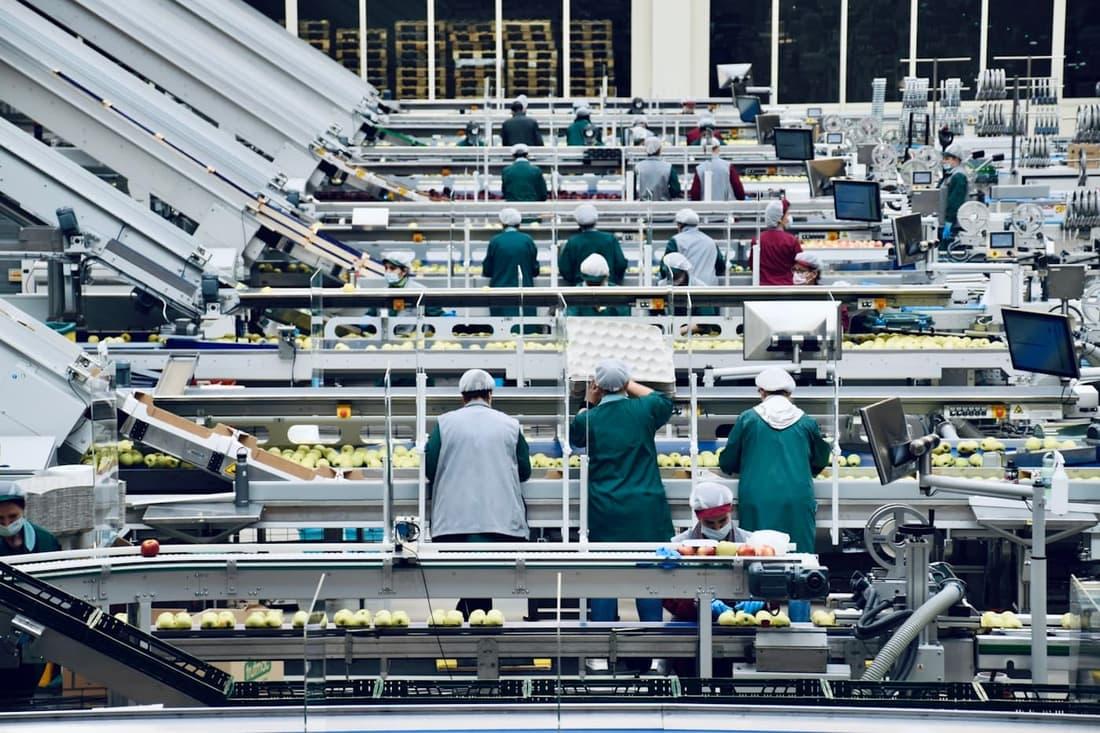
You process plant and animal products, on an artisanal or semi-industrial scale, into foods ready to eat or ready to ship.
Definition in the architecture : Artisanal and semi-industrial plant and animal processing units
What you do
- Turn root crops, cereals and fruit into flours, semolina, juices, chips and dried products
- Produce oils, butters, processed cocoa and coffee, condiments and local beverages
- Process meat, fish, milk and eggs into smoked, dried, dairy or cured products
- Pack, label and package products for retail sale and distribution
- Apply good hygiene practices and HACCP-based procedures
- Sell to shops, supermarkets, restaurants and exporters
You are the heart of value creation in the Produce – Process – Export chain. You receive raw materials from producers, cooperatives and livestock farmers, together with packaging, equipment and support services from suppliers. You deliver finished or semi-finished products to distributors, wholesalers, exporters and sometimes agro-industries. You secure a profitable outlet for local production, you reduce post-harvest losses and you unlock access for Cameroonian products to urban shelves and regional markets.
Where are you found?Mainly in and around the main cities, close to demand and to raw materials: Douala, Yaoundé, Bafoussam, Bamenda, Garoua, Maroua; cassava, plantain and palm oil processing workshops in the Centre, Littoral and South-West; dairy and cereal processing in Adamawa and the North.
Why your business matters in Cameroon and Central Africa
Agri-food SMEs are the productive fabric that adds value to Cameroon’s harvests. They turn food crops and animal products into storable foods, cut losses and create jobs, notably for women and in cities. They answer urban demand for quality local products and offer a credible alternative to food imports. Their move upmarket, with a command of hygiene, HACCP standards and labelling, opens CEMAC, Nigerian and AfCFTA markets. They are the breeding ground of tomorrow’s agro-industries and embody the Produce – Process – Export doctrine at the scale of local territories.
The headings that project promoters, partners and institutions look at first. Fill them in with your real orders of magnitude: this is what makes your profile usable.
- Secure a regular supply of raw materials from cooperatives and producers
- Meet the hygiene, labelling and compliance standards required by retail and export
- Access suitable packaging and financed semi-industrial equipment
- Find distributors, wholesalers and exporters to widen outlets
- Scale up to industrial level with technical and financial partners
What the directory brings to your organisation
Your unit is visible to producers, cooperatives, distributors and exporters looking for reliable local processors.
You receive supply, subcontracting, distribution and technical or financial support proposals from ecosystem actors.
You join the network of processors in Central Africa, positioned on CEMAC, Nigerian and AfCFTA markets.
Your listing in three steps
The directory is not a mere listing: each profile is positioned within the architecture (sub-domain, actor, value chain), checked by XP-NOVA, then published. You keep control of your profile after publication.
- The form
You enter your organisation, your position in the architecture — pre-filled from this page —, your value chains, your area of operation and your contact details. Your profile is created as pending and you receive your access.
Start my registration - Verification by XP-NOVA
The XP-NOVA team reviews your profile: consistency of the position in the architecture, reality of the declared activity, completeness of the information. If there is a reservation, the reason is sent to you and you can complete.
- Validation and publication
Once validated, your profile is published in the directory available to members, under your actor code. You update it from your area: contact details, logo, capacities, description.
Browse the directory
Already registered? Go to my area · DP3 DP3.A31
Agri-food SMEs process at a light-industrial scale: juices, flours, feed, dairy, charcuterie.
- Regular supply of raw material.
- Compliance with standards (HACCP) and certification.
- Working capital and expansion financing.
- Supply contracts with producers (F1).
- Compliance and sanitary approvals.
- Bankable business plans and fundraising.
To agrifood SMEs: more than producing — performing
Cameroon is intensifying local processing and import substitution: this is the moment for agrifood SMEs. But an SME becomes competitive only when it secures its supply, masters its standards, and structures its financing.
XP-NOVA works with SMEs that want to move from a productive idea to a structured company, capable of attracting investment, securing supply, and generating durable returns — with the quality, traceability, and consistency that markets demand.
- Supply contracts with organized producers.
- Compliance (HACCP) and sanitary approvals.
- Bankable business plans and fundraising.
- Development of value-added products for the local market and for export.
The XP-NOVA team
The XP-NOVA offers that match you, step by step
Each offer carries its code and unfolds into the elementary services of the catalogue. The project only moves forward once the milestone is reached — start at the step you are at.
44 referenced risks, rated and tied to a control plan. These are the families of the register that touch your activity — rating your project is the object of the resilience assessment, the condition of the step 4 milestone of the cycle.
- Building a bankable file — The 7 items funders really expect — and the mistakes that get a file rejected out of hand.
- Quality certification checklist — GLOBALG.A.P., Organic, HACCP: where to start depending on your actor profile and your value chain.
- Structuring your financial plan — The CAPEX / OPEX / cash-flow-per-cycle method, applied to crop and livestock projects.
- Monter un dossier bancable — les 7 composantes essentielles — Ce qu'un comité de crédit attend réellement : les 7 composantes d'un dossier de financement solide.
- Guide 2026 des financements agricoles et agro-industriels au Cameroun — Les guichets qui financent réellement l'agriculture et l'élevage — BC-PME (FINAGRO, PIISAH), ACEFA, CamCCUL, MINADER, AFD (C2D), BAD — et la méthode pour leur présenter un dossier bancable.
- The documents area — the pieces to gather, step by step, and the templates.
Position within the architecture
Core — value creation
Other actors of the sub-domain — Processing