
Warehouses & storage platforms
Operators of dry warehouses, silos and warehouse-receipt facilities who preserve harvests and let producers sell at the right time.
Definition in the architecture : Dry storage, silos, warehouse-receipt facilities
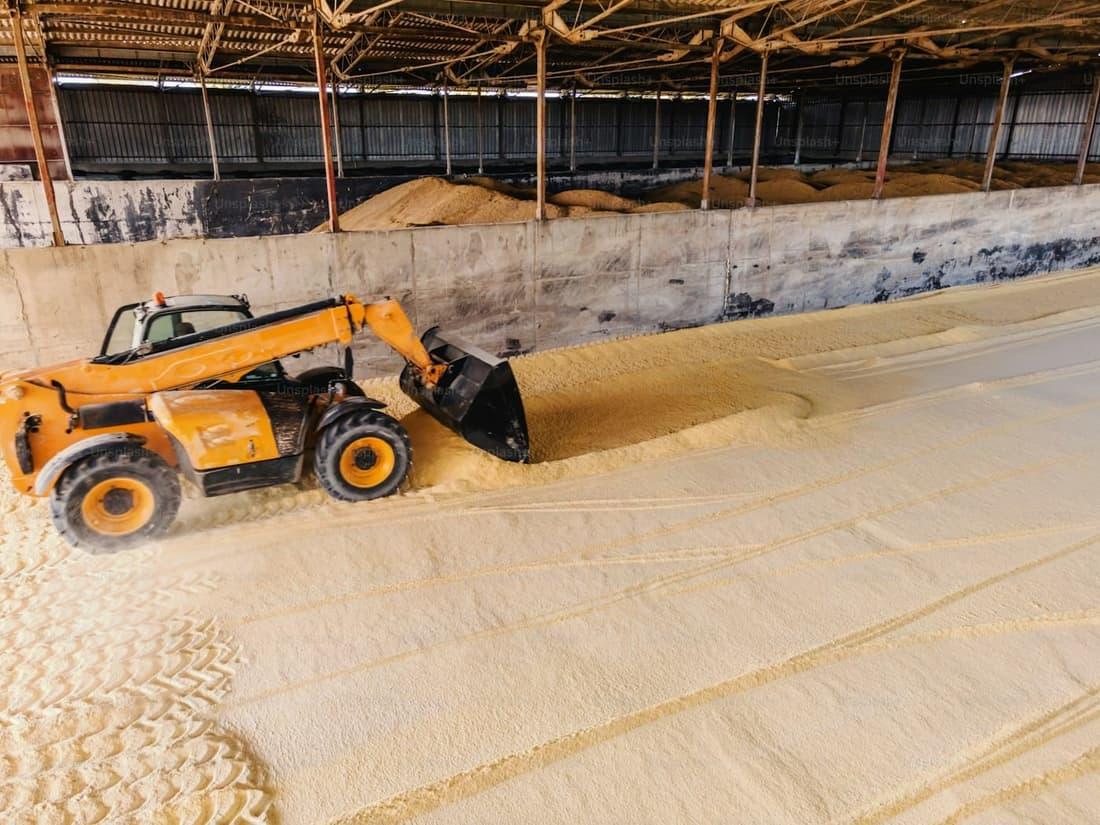
What you do
- Store cereals, pulses, dried tubers and cash crops under controlled conditions
- Run silos and warehouse-receipt facilities with weighing, grading and lot tracking
- Issue warehouse receipts that depositors can pledge as collateral with lenders
- Protect stocks against pests, moisture and storage losses
- Manage inflows, outflows and stock traceability on behalf of depositors
You receive goods from growers, cooperatives, collectors and traders, and return or deliver them to processors, wholesalers and exporters at the time chosen by the depositor. You smooth flows between a harvest concentrated in a few weeks and demand spread across the year. Through warehouse receipts, you turn stock into collateral and unlock access to credit. You secure storage quality and let growers avoid distress sales at harvest time.
Where are you found?In the cereal and cotton basins of the North and Far North around Garoua and Maroua, in the western highlands for maize and pulses, in the cocoa zones of the Centre, South and East, and at the logistics hubs of Douala, Yaoundé and Ngaoundéré.
Why your business matters in Cameroon and Central Africa
Storage losses remain one of the main value leaks in Cameroon’s food-crop chains. Well-run warehouses stabilise prices, secure the supply of cities between seasons and strengthen the food sovereignty of the country and the sub-region. Warehouse-receipt finance, framed by OHADA law on secured transactions, lets growers and cooperatives fund the next season without selling at a loss. For processors and exporters, the existence of graded, located stocks is the precondition for reliable industrial planning. These platforms therefore sit at the heart of value-chain structuring and regional food resilience.
The headings that project promoters, partners and institutions look at first. Fill them in with your real orders of magnitude: this is what makes your profile usable.
- Build warehouse-receipt systems recognised by banks and insurers
- Attract regular depositors: cooperatives, collectors, processors, traders
- Reduce storage losses through integrated pest and moisture management
- Pool platforms with hauliers and wholesalers to create logistics hubs
What the directory brings to your organisation
Your listing makes you visible to cooperatives, collectors and processors looking for secure storage in your basins.
You gain access to warehouse-receipt partnerships with financiers and storage contracts with traders and exporters.
You plug into the regional reserves and flows that feed urban markets in Cameroon and across CEMAC.
Your listing in three steps
The directory is not a mere listing: each profile is positioned within the architecture (sub-domain, actor, value chain), checked by XP-NOVA, then published. You keep control of your profile after publication.
- The form
You enter your organisation, your position in the architecture — pre-filled from this page —, your value chains, your area of operation and your contact details. Your profile is created as pending and you receive your access.
Start my registration - Verification by XP-NOVA
The XP-NOVA team reviews your profile: consistency of the position in the architecture, reality of the declared activity, completeness of the information. If there is a reservation, the reason is sent to you and you can complete.
- Validation and publication
Once validated, your profile is published in the directory available to members, under your actor code. You update it from your area: contact details, logo, capacities, description.
Browse the directory
Already registered? Go to my area · DP4 DP4.A44
They operate warehouses and storage platforms — dry and cold — where loss reduction is decided.
- Heavy investment in cold capacity.
- Occupancy rate and business model.
- Food-storage standards.
- Sizing and financing of warehouses.
- Warrantage and stock-backed credit.
- Modern management (WMS) and certification.
The XP-NOVA offers that match you, step by step
Each offer carries its code and unfolds into the elementary services of the catalogue. The project only moves forward once the milestone is reached — start at the step you are at.
44 referenced risks, rated and tied to a control plan. These are the families of the register that touch your activity — rating your project is the object of the resilience assessment, the condition of the step 4 milestone of the cycle.
- The documents area — the pieces to gather, step by step, and the templates.
Position within the architecture
Downstream — preserving and moving value
Other actors of the sub-domain — Logistics & Distribution