
Staple food crops
Maize, cassava, plantain, yam…: food security, productivity.
Maize/sorghum: Far North, North, Adamaoua. Cassava/macabo: Centre, South, East, Littoral. Yam: North, Adamaoua.
7 regions out of 10
Schematic map — relative positions, not to scale.
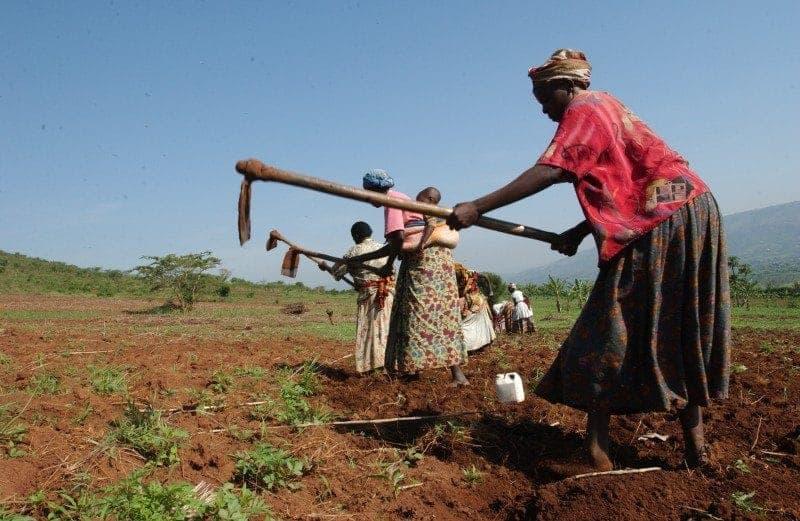
Maize, cassava, plantain, yam: food crops feed the country and supply agro-industry (feed, starch, flours).
- Irregular yields and high climate vulnerability.
- Significant post-harvest losses due to a lack of drying and storage.
- Competition from imports on certain segments (rice, flours).
- Sustained demand from agro-industry (feed mills, breweries, starch plants).
- Local flours and processed products substituting for imports.
- Mechanization and improved seeds: quick productivity gains.
Securing steady volumes is the first lever of a competitive food-crop value chain.
- Improved seeds and healthy cuttings (cassava, plantain) for stable yields.
- Technical itineraries and balanced fertilization adapted to each basin.
- Targeted mechanization (land preparation, harvest) for productivity.
- Organising producers to bulk up the offer.
Processing stabilizes prices and opens agro-industrial outlets.
- Local flours (cassava, maize, plantain) substituting for imports.
- Starch, gari, chips and dried products with higher value.
- Feed: maize and cassava supply poultry and livestock.
- Drying and milling units anchored in the production areas.
Post-harvest losses weigh heavily: cutting them creates value without producing more.
- Controlled drying and storage suited to tubers and cereals.
- Warrantage: store to sell at a better price off-season.
- Good preservation practices against moisture and pests.
Sustained domestic and agro-industrial demand, to be secured through reliable channels.
- Contracting with feed mills, breweries and starch plants.
- Cooperative bulking to weigh on prices.
- Import substitution (flours, starch) as a growth driver.
Agrovita structures the food-crop value chain, from field to agro-industrial market.
- Technical support, seeds and mechanization for yields.
- Engineering of drying, storage and processing units.
- Cooperative structuring and downstream contracting.
From raw material to the circular economy (N1 → N4)
Note NS-20260829/DG/XPN-REF1: four processing levels, from raw packaged product (N1) to recovered by-products and waste (N4), with the destination industrial sector(s).
Shelled, bagged maize cobs; washed and graded cassava tubers; graded, packed green plantain; washed, graded yam.
High-quality cassava flour (HQCF); cassava starch and flour; industrial maize semolina/flour; plantain flour.
Cassava/maize-based pasta; packed plantain chips; packed gari; biscuits made from local flours.
Maize bran and cake (animal feed); cassava/plantain peels (compost, livestock feed); starch-mill residues (methanisation).
The product type describes what leaves the farm or the unit, in its state of sale — it is what triggers processing, cold-chain, compliance and certification services.
Market, post-harvest, logistics.
Cold chain, storage, corridor, product compliance.
Unit sizing, energy, food safety management.
Full unit, HACCP, labelling, brand.
44 referenced risks, rated and tied to a control plan. The dominant families for this value chain:
- Building a bankable file — The 7 items funders really expect — and the mistakes that get a file rejected out of hand.
- Quality certification checklist — GLOBALG.A.P., Organic, HACCP: where to start depending on your actor profile and your value chain.
- Structuring your financial plan — The CAPEX / OPEX / cash-flow-per-cycle method, applied to crop and livestock projects.
- Monter un dossier bancable — les 7 composantes essentielles — Ce qu'un comité de crédit attend réellement : les 7 composantes d'un dossier de financement solide.
- Fiche fiscale 2026 — Fiscalité foncière et sécurisation agricole au Cameroun — Ce que la Loi de Finances 2026 change pour vos terres : exonérations de TPF pour l'agriculture, l'élevage et la pêche, frais de bornage réduits de moitié, et l'immatriculation foncière en 4 étapes budgétées en FCFA.
- Guide 2026 des financements agricoles et agro-industriels au Cameroun — Les guichets qui financent réellement l'agriculture et l'élevage — BC-PME (FINAGRO, PIISAH), ACEFA, CamCCUL, MINADER, AFD (C2D), BAD — et la méthode pour leur présenter un dossier bancable.
- Auto-évaluation OHADA — votre GIC ou coopérative est-il éligible aux crédits ? — Grille de diagnostic en 4 domaines (structure juridique, comptabilité, gouvernance, sûretés) pour situer votre groupement face aux exigences de l'Acte Uniforme OHADA — la clé d'accès aux guichets de financement.
- The documents area — pieces to gather and templates.
- AGROEXPORT — this value chain's prices are tracked internationally, by subscription.
Where projects in this value chain begin
A promoter seeking finance who wants the complete file in one engagement, rather than chaining pre-qualification, investment decision and financial structuring separately.
Indicative duration: About 16 weeks →Pre-qualify pathwayA promoter with an intention, a plot or an opportunity, but nothing formalised.
Indicative duration: 2 to 4 weeks →Decide to invest pathwayA promoter whose idea is mature and who is considering a significant financial commitment.
Indicative duration: 6 to 10 weeks →Design the facility pathwayA decided project whose means of production must be settled before costing.
Indicative duration: 8 to 14 weeks →Finance pathwayA designed project seeking financing matched to its cycle.
Indicative duration: 10 to 18 weeks →