
Fish farmers & aquaculture operators
You raise tilapia, catfish or other species in ponds, tanks or cages: you produce the fresh fish that Cameroon’s cities are short of.
Definition in the architecture : Aquaculture in ponds, tanks and cages (tilapia, catfish…)
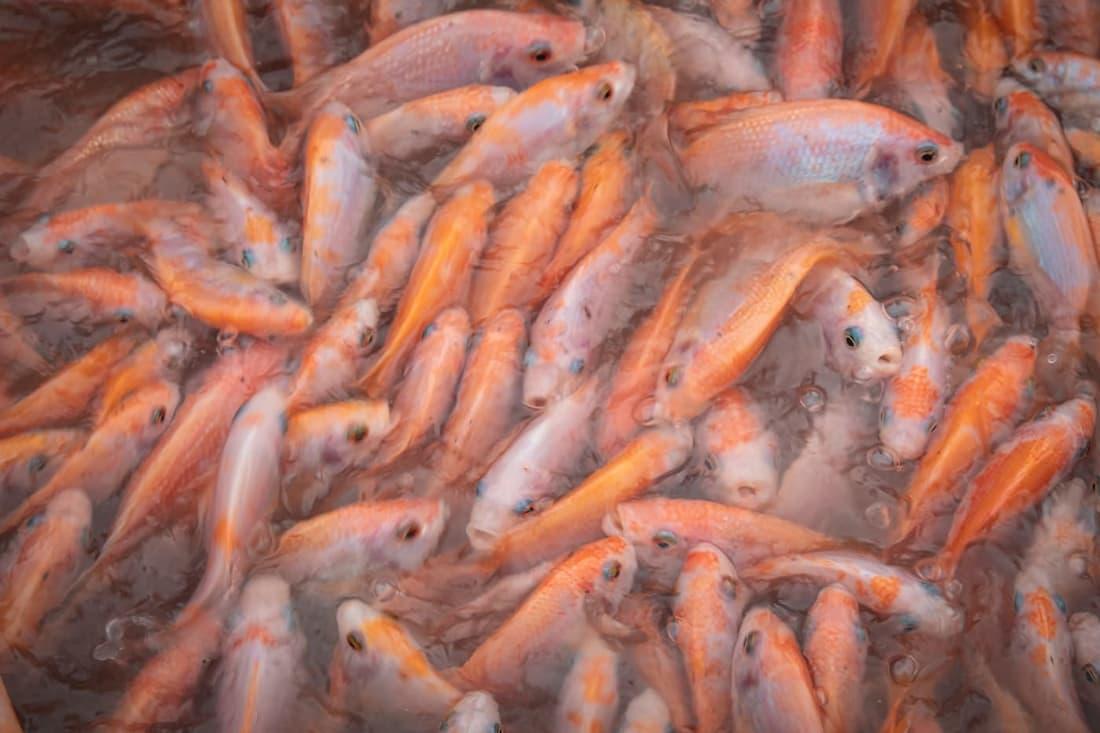
What you do
- Raise tilapia, catfish or other species in ponds, above-ground tanks or floating cages
- Produce or purchase fingerlings and manage grow-out cycles
- Feed fish with compound feed or feed made on the farm
- Monitor water quality, fish health and farm biosecurity
- Harvest, grade and sell live or fresh fish to markets, fish traders and restaurants
You are an upstream producer in the fisheries value chain. You receive fingerlings, feed, equipment and advice from hatcheries, feed manufacturers and support services. You deliver live or fresh fish to fish traders, urban markets, restaurants and artisanal or industrial processors. You secure a local fish supply that reduces dependence on imports, and you unlock for downstream actors a regular supply of controlled size and quality, suitable for processing and for sale through organised channels.
Where are you found?Across the whole country wherever water is available: lowlands and reservoirs in the Centre, South and East; the Western Highlands and North-West for tilapia ponds; the outskirts of Yaoundé and Douala for above-ground tanks; lakes and reservoirs in the North and Adamawa for cage farming close to urban demand.
Why your business matters in Cameroon and Central Africa
Cameroon consumes a great deal of fish and imports a large share of it. Aquaculture is the most direct lever to close this gap, create jobs in rural and peri-urban areas and offer households an affordable protein. It makes use of water bodies, lowlands and land poorly suited to crops. The growth of hatcheries, feed mills and cold chains around farms builds a complete value chain. Across Central Africa, Cameroonian know-how in tilapia and catfish can supply the urban markets of CEMAC, where demand for fresh fish exceeds local supply.
The headings that project promoters, partners and institutions look at first. Fill them in with your real orders of magnitude: this is what makes your profile usable.
- Access quality fingerlings and high-performance feed at a manageable cost
- Secure regular outlets with fish traders, restaurants and processors in nearby cities
- Improve technical management and biosecurity to cut losses across the production cycle
- Access finance for ponds, cages and the working capital needed to buy feed
- Join forces with other farmers to pool input purchases and marketing
What the directory brings to your organisation
Your fish farm becomes visible to fish traders, restaurants, processors and fingerling and feed suppliers looking for identified producers.
You receive offers for delivery contracts, joint marketing and technical support put forward by value chain actors.
You take your place in the fisheries value chain of Cameroon and Central Africa, oriented towards the urban markets of CEMAC.
Your listing in three steps
The directory is not a mere listing: each profile is positioned within the architecture (sub-domain, actor, value chain), checked by XP-NOVA, then published. You keep control of your profile after publication.
- The form
You enter your organisation, your position in the architecture — pre-filled from this page —, your value chains, your area of operation and your contact details. Your profile is created as pending and you receive your access.
Start my registration - Verification by XP-NOVA
The XP-NOVA team reviews your profile: consistency of the position in the architecture, reality of the declared activity, completeness of the information. If there is a reservation, the reason is sent to you and you can complete.
- Validation and publication
Once validated, your profile is published in the directory available to members, under your actor code. You update it from your area: contact details, logo, capacities, description.
Browse the directory
Already registered? Go to my area · DP6 DP6.A161
They produce farmed fish (tilapia, catfish) that must fill the national fisheries deficit.
- Supply of fingerlings and high-performing feed.
- Technical mastery of grow-out and water quality.
- Selling fresh fish without a structured cold chain.
- Engineering of profitable aquaculture farms.
- Networking with hatcheries and feed mills.
- Bankable business models and organized outlets.
To fish farmers: feeding the country, building a value chain
Every year, Cameroon imports hundreds of thousands of tons of fish. Behind that figure lies an immense opportunity for those who produce locally: the demand is there, massive and durable.
XP-NOVA supports fish farmers who want to move from a fragile activity to a structured value chain: reliable supply of fingerlings and feed, technical command of grow-out, and above all organized market outlets — because well-produced fish must also be well sold.
- Engineering of profitable, bankable fish farms.
- Networking with hatcheries, feed producers, and buyers.
- Access to the cold chain and urban markets.
The XP-NOVA team
The XP-NOVA offers that match you, step by step
Each offer carries its code and unfolds into the elementary services of the catalogue. The project only moves forward once the milestone is reached — start at the step you are at.
44 referenced risks, rated and tied to a control plan. These are the families of the register that touch your activity — rating your project is the object of the resilience assessment, the condition of the step 4 milestone of the cycle.
- Building a bankable file — The 7 items funders really expect — and the mistakes that get a file rejected out of hand.
- EUDR compliance for producers — The European deforestation regulation: what changes for Cameroonian cocoa, coffee and rubber.
- Quality certification checklist — GLOBALG.A.P., Organic, HACCP: where to start depending on your actor profile and your value chain.
- Structuring your financial plan — The CAPEX / OPEX / cash-flow-per-cycle method, applied to crop and livestock projects.
- Monter un dossier bancable — les 7 composantes essentielles — Ce qu'un comité de crédit attend réellement : les 7 composantes d'un dossier de financement solide.
- Guide de conformité aux exigences d'exportation — Règlement Déforestation (RDUE) Cacao & Café — Exporter vers l'UE après le RDUE : géolocalisation des parcelles, diligence raisonnée et preuves attendues.
- Fiche fiscale 2026 — Fiscalité foncière et sécurisation agricole au Cameroun — Ce que la Loi de Finances 2026 change pour vos terres : exonérations de TPF pour l'agriculture, l'élevage et la pêche, frais de bornage réduits de moitié, et l'immatriculation foncière en 4 étapes budgétées en FCFA.
- Guide 2026 des financements agricoles et agro-industriels au Cameroun — Les guichets qui financent réellement l'agriculture et l'élevage — BC-PME (FINAGRO, PIISAH), ACEFA, CamCCUL, MINADER, AFD (C2D), BAD — et la méthode pour leur présenter un dossier bancable.
- Auto-évaluation OHADA — votre GIC ou coopérative est-il éligible aux crédits ? — Grille de diagnostic en 4 domaines (structure juridique, comptabilité, gouvernance, sûretés) pour situer votre groupement face aux exigences de l'Acte Uniforme OHADA — la clé d'accès aux guichets de financement.
- The documents area — the pieces to gather, step by step, and the templates.
Position within the architecture
Upstream — aquaculture and fisheries production
Other actors of the sub-domain — Fisheries & aquaculture