
Organised labour groups
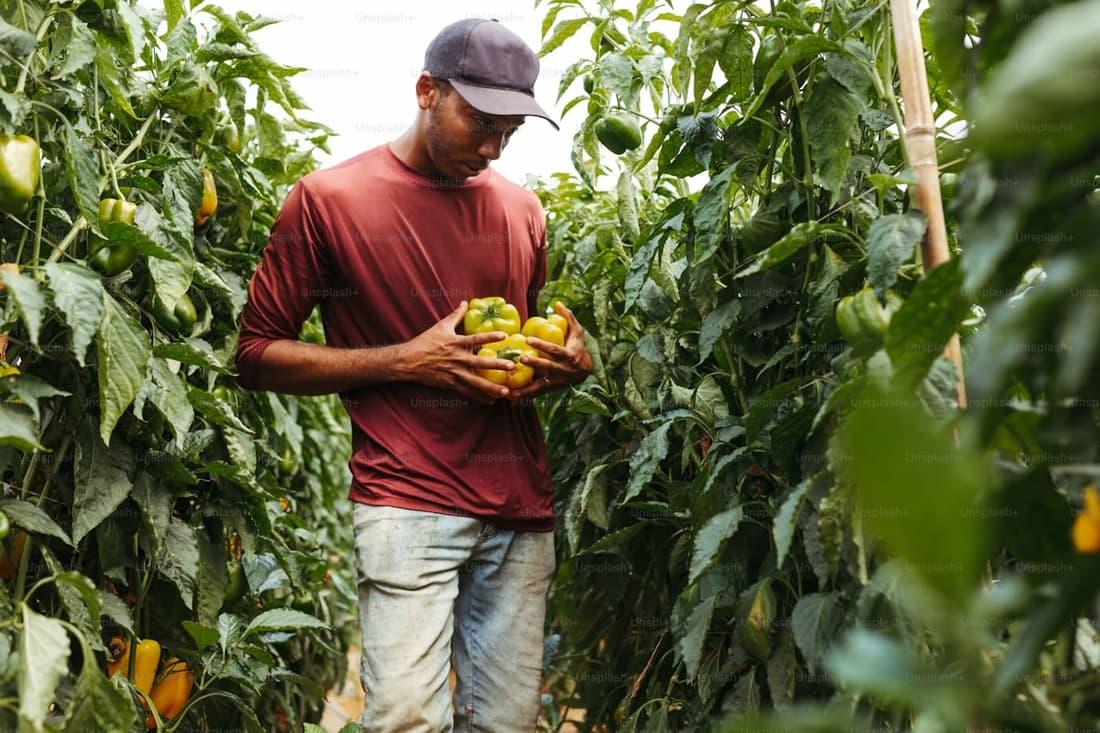
You bring together organised collective work teams that can be mobilised quickly for the seasonal tasks of the farms in your area.
Definition in the architecture : Collective work teams available for seasonal farm labour
What you do
- Organise collective work teams for land clearing, sowing and harvesting
- Negotiate and contract services with farms and cooperatives
- Allocate tasks, supervise members and ensure safety on work sites
- Manage members’ pay and the operating rules of the group
- Develop members’ skills through peer-to-peer learning on the job
You receive requests from family farmers, planters and cooperatives in your basin that need many hands over a short period. You deliver a close-knit team, used to working together and supervised by its own leaders. You secure the operations that cannot wait — clearing, planting, harvesting — and you unlock for small farms an access to collective labour that lets them keep to the agricultural calendar and deliver on time. Your teams are often the first link that makes production possible at all.
Where are you found?These groups exist in all rural areas of Cameroon, with a particular density in the Western and North-West Highlands, the cocoa basins of the Centre, South and South-West, and the cotton and cereal zone of the North and Far North. They are organised at village or sub-division level.
Why your business matters in Cameroon and Central Africa
Organised labour groups extend the long-standing traditions of rural mutual aid in Cameroon by giving them an organised and contractual form. They are often the only labour resource available to family farms far from towns. They provide regular income to young people and women in rural areas, limit migration towards cities and strengthen the cohesion of farming communities. By enabling smallholders to cultivate more land and harvest at the right time, they support the supply of local markets and export chains across Central Africa. Their contribution to rural employment and food security is real, even when it remains largely invisible.
The headings that project promoters, partners and institutions look at first. Fill them in with your real orders of magnitude: this is what makes your profile usable.
- Formalising the group to access contracts with cooperatives and agricultural projects
- Improving safety at work and the protection of members on work sites
- Extending the client base beyond the village through connections with value-chain actors
- Accessing technical training to offer higher-value services to farms
What the directory brings to your organisation
Your listing makes your group known to the farmers, planters and cooperatives in your basin looking for available and supervised teams.
You gain access to agricultural projects, works contractors and staffing agencies seeking organised teams for their work sites.
You take your place in the regional ecosystem as a structured workforce recognised by the actors who produce and process in your area.
Your listing in three steps
The directory is not a mere listing: each profile is positioned within the architecture (sub-domain, actor, value chain), checked by XP-NOVA, then published. You keep control of your profile after publication.
- The form
You enter your organisation, your position in the architecture — pre-filled from this page —, your value chains, your area of operation and your contact details. Your profile is created as pending and you receive your access.
Start my registration - Verification by XP-NOVA
The XP-NOVA team reviews your profile: consistency of the position in the architecture, reality of the declared activity, completeness of the information. If there is a reservation, the reason is sent to you and you can complete.
- Validation and publication
Once validated, your profile is published in the directory available to members, under your actor code. You update it from your area: contact details, logo, capacities, description.
Browse the directory
Already registered? Go to my area · DADX.F6 DADX.F6.A113
Placement agencies, works contractors, labour groups, vocational training: qualified labour is a recurring limiting factor of projects.
- Strong seasonality of labour demand.
- Qualification and retention of teams.
- Formalisation of employment relations.
- Labour needs anticipated from the sizing of the production tool.
- Listing by link and stage of intervention.
- Projects supported over time, hence recurring needs.
The XP-NOVA offers that match you, step by step
Engineering offers are addressed to promoters. Your place is in the actors directory and the partner referencing: that is where promoters find you.
Position within the architecture
Cross-cutting support — mobilising and training farm labour
Other actors of the sub-domain — Workforce